Wednesday, November 9, 2011

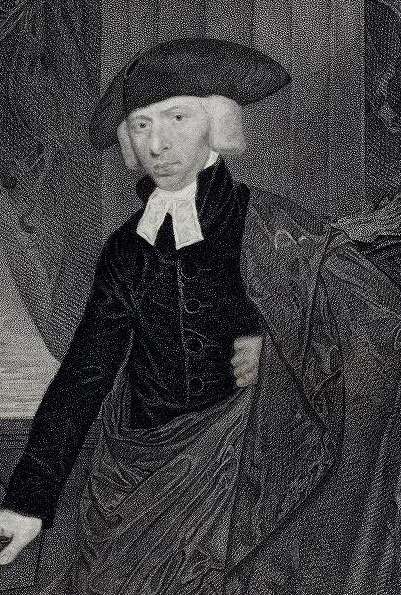
Rabbi Raphael Meldola (Livorno 1754- London 1828)


Raphael Meldola (1754-1828), was the son of Moses Hezekiah Meldola (1725-1791), professor of Oriental languages in Paris. Raphael was born in Leghorn (Livorno), Italy in 1754. He received a thorough university training, both in theological and in secular branches, and displayed such remarkable talents that when only fifteen years old he was permitted to take his seat in the rabbinical college and received his rabbinical ordination from the famous Chida (Rabbi Chayim Yosef David Azulai, z"l).

In 1804 he was appointed as Chakham of the Sephardi community in London. Rabbi Meldola possessed of a remarkably virile mind, he was a dominant factor in the British Jewry of his generation. His scholarship attracted around him a circle in which were many of the most distinguished men of his day, including Benjamin Disraeli (first Jewish-born British Primer Minister) and Isaac Disraeli and it is noteworthy that he opposed the policy which produced the famous rupture between the later and the mahamad (the lay leaders of the Spanish and Portuguese community in London). He maintained a literary correspondence with many of the most prominent Christian clergymen and scholars of his time; and his acquaintance with the Archbishop of Canterbury and the Canon ofWindsor led to his being received by King George III. He wrote the book Chuppat Chatanim (1797), on the laws of marital life. He also published sermons and memorial poems. His book Derekh Emunah (The Way of Faith) appeared with his English translation after his death. His son David Meldola (1797-1853), succeeded him as presiding rabbi though not as Chakham of the Sephardi community in London.


In the following Rabbinical Responsa
, rabbi Meldola criticizes all those who are not careful to read the Tora or the Tefila, without knowing and without applying the laws of Hebrew grammar (diqduq). In the Hebrew section of the Responsa, he also criticizes those who pretend that correct Hebrew reading pertain to the area of Minhagim, and therefore, don't see the correct reading of the Tora as absolutely mandatory. It is a worth reading text for all those interested in Hebrew grammar and its application in Jewish Liturgy.

“it is incontrovertible evident that the Torah or Divine Law, which is read in every Synagogue in the world throughout tho year, as also our Forms of Prayers which we address to God must be read correctly and distinctly according to the principles of Grammar, vowel points, &c, as the Prophet Nehemiah expresses, chap. viii., v. 8," So they read in the book in the law of God, distinctly, and gave the sense and caused them to understand the reading." Agreeably to the greatest Authorities, both, ancient; and modern,'as Talmud, Maimonides, Shulchanaruhk, or the Code of our holy Laws, &c. and 'which has been strictly observed by all our fathers from the lime of our great Lawgiver to the present day....”

Tuesday, November 8, 2011

Shema Israel: Pasuq 1. God exists. He is our God. And He is one.

Last week we explained the first word "Shema". Which in Hebrew means, listening while paying attention and understanding what you are told.

Elsewhere, I have shared with the readers a derasha on the second word: "Israel", and how it hints to the names of our three patriarchs and four matriarchs.
These two words are announcing that a very important message will be delivered to the members of the Nation of Israel.

"HaShem is our God, HaShem is one"

"HaShem", literally means "The Name" and it alludes to God. So, anytime you find "HaShem" you could mentally replace it for "The God of Israel".

Rabbenu Bahya Ebn Paquda (Span, XI century) in his book Chobot haLebabaot explains that this verse includes three principles, the core beliefs of the Jewish faith.

1. HaShem IS our God...: The first thing you affirm when you say "the book is blue" is that the book "is" = exists. Similarly. The first message of "Shema Israel" is that HaShem exists.

2. HaShem is OUR God: Evidently, HaShem is the God of every human being. He is the Creator of heavens, earth and life. What does it mean then OUR God?"Our" God is saying more about US than about God. It means that God established a special covenant, a unique relationship with us, by choosing us and giving us His Tora. He made us HIS People, the "chosen people". Which implies that we have more responsibilities and we are expected to follow higher moral standards than gentiles.

3. HaShem is ONE: The unity of God is a cardinal principle. There are no gods or other forces outside God's control. One example: We don't believe in "Nature" as an independent force. God is the artifice of nature. He controls, runs and operates nature.


Monday, November 7, 2011

Pidyon haBen. How frequent is it?

Last week we explained the Mitzva of Pidyon haBen, and why the first born males have to be redeemed from a Cohen.
The Pidyon HaBen applies only to males (women were not bound to the service of the Tabernacle and Bet haMiqdash).
To be redeemed, the baby must be a bekhor, a natural-born-first-born-boy, who "opened his mother's womb" (peter rechem). Therefore, if his mother have previously given birth to a baby girl, the boy who is born after her is not considered a first-born.
If the mother had a miscarriage or an abortion, the first-born is not considered a bekhor. This is when the miscarriage occurred after the third month of pregnancy. However, if the miscarriage occurred during the first 40 days of pregnancy, redemption is required. If it occurred after forty days, but before the fetus developed distinguishing physical characteristics, redemption of the first-born is still required, but the ritual berakha said by the father is omitted.
The bekhor, has to be born naturally (peter rechem). Therefore, if the first born is a boy, but he was born via C-section, he is not considered a naturally born bekhor and he is not redeemed.
Also, if the father or the mother are Cohen the Pidyon is not performed. And lastly, if the mother or father are Levites (levy), the Pidyon is not done. Why? Because the Levites are still obliged to assist the Cohanim in Divine service, andcannot be redeemed from this religious obligation. Levites remain irredeemably to this day, and are expected to report for duty as soon as B'H our Bet HaMiqdash will be rebuilt.
All these conditions mean that Pidyon haben is rather the exception, not the rule. It happens in approximately in 35% of all first time births.

ISRAEL TODAY
This is a rare video, of Benjamin Netanyahu (he was called then "Ben Nitay") when he was student in MIT, and 28 years old. It is remarkable to see that the issues that concerned Israel today have not changed a lot, and that Mr, Netanyahu has maintained his consistency since 1978...
Don't miss it: Click here