Friday, January 11, 2013
SHABBAT: Lighting Shabbat candles in a Hotel.
Friday, January 4, 2013
SHABBAT: Understanding Shabbat Candle lighting
Friday, November 9, 2012
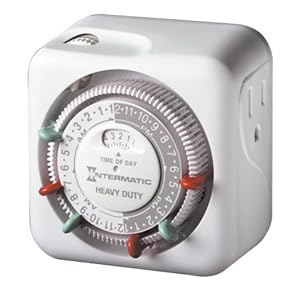
SHABBAT: Modifying a Shabbat timer
Friday, August 17, 2012
SHABBAT: Using an elevator on Shabbat
But what about taking an elevator that has been programmed to stop in every floor and it automatically opens and closes its doors? They are known in Hebrew as ma'alit Shabbat and in Israel, New York and other areas with a significant Jewish population, one can find these elevators in hotels, Hospitals or big apartment buildings. Are those elevators permitted on Shabbat?
Friday, August 10, 2012
SHABBAT: Using sound amplifiers on Shabbat
Friday, June 29, 2012
SHABBAT: From fire to electricty (Part 4)
Shabbat Shalom!
Candle Lighting in NYC: 8:13 PM
Shabbat ends in NYC: 9:20 PM
For a comprehensive analysis and discussion of this matter I recommend the following article The Use of Electricity on Shabbat and Yom Tov by Rabbi Michael Broyde & Rabbi Howard Jachter which appeared in the Journal of Halacha & Contemporary Society, No. XXI - Spring 91 - Pesach 5751
Friday, June 22, 2012
SHABBAT: From fire to electricity (Part 3)
Friday, May 11, 2012
SHABBAT: From fire to electricity (Part 2)
Friday, May 4, 2012
SHABBAT: From fire to electricity (Part 1)
Friday, February 24, 2012
SHABBAT: At-risk youth and Shabbat dinner
Friday, February 11, 2011
SHABBAT: Juice and snow
As we've explained, every melakha includes also similar operations. But it is a little tricky to establish (or knowing) what is included and what not, within the principles of each melakha.
In the case of 'threshing', it includes all actions where 'food' is intentionally extracted from its natural inedible container.
A few examples:
Squeezing a fruit on Shabbat is forbidden. We can not make orange juice, either by hand, or by a juice squeezer. But lemon is considered an exception, because is only used as juice. So, it is permitted to squeeze lemons by hand for lemonade, salad dressing, etc.
It is forbidden to 'melt' snow on Shabbat when the intention is drinking the water. That will be an action similar to extracting juice from a fruit. However (if needed) it is permitted, to apply melting salt on snow or ice on Shabbat, because we don't need the water, we just need to get rid of the snow. (Yalkqut Yosef, Shabbat 3, 358).
It is also permitted to use ice on a drink, because the melting happens by itself, there is no 'extraction'.
Shabbat Shalom!!!
Candle ligting in NYC: 5:07
Shabbat ends in NYC: 6:16
Dear readers.
Halakha of the Day will be momentarily suspended. It will resume B'H in a few weeks.
For websites with daily Shiurim or Halakhot, check the mega portal:
Rabbi Yosef Bitton. YMJC | 130 Steamboat Rd. | Great Neck | NY | 11024
Friday, February 4, 2011
Candle Lighting
The traditional custom is to light two candles, one representing Shamor and the other one representing Zakhor.
Shamor and Zakhor are the two versions (like: the 'two sides' of the coin) of the first word of the fourth commandment. Shamor means, 'keeping Shabbat', in the sense of refraining ourselves from transgressing the Shabbat working or doing any forbidden Melakha (creative tasks, as defined by the Halakha). And Zakhor includes the performance of all positive things we do to honor the Shabbat.
1. Using festive clothing and having special food for Shabbat.
2. Welcoming Shabbat with the Kiddush.
3. Honoring Shabbat when it finishes, 'accompanying' its departure by the Habdalah ceremony, same as one would do with an important guest: welcoming him when he comes to our house and accompanying him as he leaves our house.
Although the woman of the house has priority to light Shabbat candles, if she is no home or if she is not able to light the candles, the husband or one adult member of the family could light the candles, and recite the corresponding blessing.
Shabbat Shalom!
Candle lighting in NYC: 4:58 PM
Shabbat Ends in NYC: 6:07 PM
Rabbi Yosef Bitton. YMJC | 130 Steamboat Rd. | Great Neck | NY | 11024
Friday, January 28, 2011
At what point does Shabbat start?
Shabbat Ends in NYC: 5:59 PM
Friday, January 21, 2011
SHABBAT and plowing (Choresh)
Plowing is the hardest work of farming. When you want to plant seeds, like wheat seeds for example, and harvest them, you need to plow the soil first. Loosening up the ground around those seeds so that water will get to them, and so that they will be able to grow. You can plow even with a strong stick: you stick it in the ground and wiggle it around, and then drop a seed in, covering it loosely with dirt.
But when you want to plow an entire field it's faster to use a real plow, pulled by horses, donkeys or an ox. As the animals push it along through the dirt, the soil gets ready to host the seeds.
On Shabbat it is prohibited to plow the ground --to level it off or make holes in it, like the holes used for planting seeds or for planting trees. Included in this prohibition is any preparation or improvement of land for agricultural use.
Involuntary plowing should be prevented as well. This includes for example carrying a heavy object -a very heavy chair for example- in soft ground, unintentionally making furrows. Making holes or furrows in the ground and making mere compressions in the ground is different. The latter, which is what wheels of a wheelchair or a baby carriage might do to the ground, is permissible on Shabbat.
Shabbat Shalom!!!
Shabbat ends in NYC: 5:50 PM
Click here to see real Plowing:
http://www.youtube.com/watch?v=SocUHhtLIIY&feature=related
Rabbi Yosef Bitton. YMJC | 130 Steamboat Rd. | Great Neck | NY | 11024
Friday, January 14, 2011
SHABBAT and watering plants and flowers (Zore'a)
There are 39 categories of Melakha (creative tasks) that are forbidden of Shabbat.
One of them is Zore'a, which literally means: sowing.
Shabbat Shalom!
Rabbi Yosef Bitton. YMJC | 130 Steamboat Rd. | Great Neck | NY | 11024
Friday, January 7, 2011
SHABBAT plucking fruits or flowers (Kotzer)
In other words, cutting or plucking any 'growing' thing.
This is one of the few melakhot explicitly mentioned in the Torah (Ex. 34:21), "Six days shall you work, but you shall pause on the seventh; in plowing and in harvesting, you shall stop."
Examples: During Shabbat you cannot reap a fruit from its tree, even though you intend to eat it right away. Similarly, during Shabbat you cannot cut a mint -branch while is attached to the ground. Not even to use it for smelling it and say a berakha (when using mint branches for Habdala, we should be careful to pick those mint branches, only once Shabbat is over!).
From the other side, once the fruit is already detached from the tree or a plant is detached from the ground, you may cut it or break it in smaller pieces.
For example: if you have a mint branch already detached from the ground, you may cut it 'with your hands' in smaller branches or leaves, in the same way you are allowed to cut an apple, once is not in the tree anymore.
A a fruit which falls naturally from a tree on Sabbath, may not be used on the same day (Mukse).
Shabbat Shalom!
Candle Lighting in NY: 4:26 PM
Shabbat Ends in NY: 5:35 PM
Children Singing Moroccan Habdalah http://www.youtube.com/watch?v=xigNLJkD5RQ
Rabbi Yosef Bitton. YMJC | 130 Steamboat Rd. | Great Neck | NY | 11024
Wednesday, December 29, 2010
Welcoming Shabbat
- Every day, my father in law, who lives in Ashdod, Israel, would go to the market and come home with some delicious fruit or treat--declaring that he bought it in honor of Shabbat.
- This is the attitude with which we are supposed to welcome the Shabbat queen.Preparing ourselves to welcome Shabbat, every day of the week!
Shabbat is not simply the seventh day of creation, Shabbat is the purpose of Creation. It is not the end of the week, it is the goal of the week. As such, our preparations for it start way before it begins. Every single member of the family should personally help in some way prepare for Shabbat, from the father to the young children.
Before Shabbat arrives one should be bathed and dressed in special clothing, even if one is at home with no guests. The house should be cleaned, as if very important guests were coming. The food should be ready, the table set with Shabbat finery. All items forbidden on Shabbat--known as Muktzeh-- should be put away. It is important to check the pockets of the clothes you will use (especially coats!) to make sure there is no money, cell phones, I-Pods or other Muktzeh in it.
Friday, December 24, 2010
SHABBAT and alarm systems
Shabbat ends in NYC: 5:23 PM
Today in American Jewish History, from Aish http://www.aish.com/dijh/46572422.html
Rabbi Yosef Bitton. YMJC | 130 Steamboat Rd. | Great Neck | NY | 11024
Friday, December 10, 2010
SHABBAT and motion activated lights
Can I walk past a motion sensitive light on Shabbat?
In order to respond this simple question we must first clarify a few Halakhic principles.
When one performs a permitted action and inevitably a forbidden action or melakha will result from it (this category is called pesik resheh) he is forbidden to proceed with the permitted action, even when he had not intent.
For example: dragging of a heavy chair over soft earth on Shabbat, will inevitably result in the production of furrows which constitute a melakha (activity forbidden on Shabbat, which in this case is Deoraita!).
When as a result of a permitted action ('walking') a forbidden melakha ('turning on the light') will be unintentionally and automatically generated, if I don't care or need the product that results from it, and it is not Deoraita, I'm allowed to perform the permitted action.
When I'm walking in the street, I don't need those lights (lo nicha leh), since the lights are shut off by themselves (not permanent, not Deoraita) so, I'm allowed to walk past that street even if the lights will be automatically activated.
Similarly, I'm allowed to walk by a surveillance system, even though little lights are turn on and off, or by a video cameras, as long as I don't do this intentionally or for my beenfit.
Passing by an optical eye which opens automatically a door I have to pass, iwould be forbidden because I care for that door to open, I need the door open.
NOTE: For those who want to understand better this Halakha I wrote a short explanation in the link below.
Candle lighting in NYC: 4:00 PM
Shabbat ends: 5:18 PM
Shabbat Shalom!
Friday, November 26, 2010
A commercial website operating on Shabbat
Fishing and Commercial websites
In previous halakhot we explained that the rabbis of the Mishna (200 CE) discussed the status of self activated devices on Shabbat, programmed before Shabbat begins. The rabbis authorized for example, to set fishing nets on a river on Friday,knowing that fish will be caught during Shabbat. The caught fish, obviously, must be removed after Shabbat (See link)
We learn from the case of the fish nets, that a profit generated during Shabbat, if no human action was involved,it does not represent a Shabbat problem. For this reason you can have stocks or money in a savings account, although it will generate a profit on Shabbat.
Can we apply the same logic to a commercial web site, and authorize a Jew to keep his web site 'operating'automatically during Shabbat?
Modern rabbis are divided in the interpretation of the web site case, vis-a-vis the fishing nets of the Mishna. Some rabbis (Shebet Halevy, 10,57) would not authorize a web site because, unlike the case of the fishing nets, there is a principle of 'trade' involved in the website. This is apparently the opinion followed by some companies like www.bhphotovideo.com whose website remains available 24/7/365, but orders are not 'accepted'until Shabbat ends.
It seems, however, that the majority of modern orthodox rabbis authorize to have a commercial website self operating on Shabbat, with 2 conditions
1. That the majority of potential customers are not Jewish customers. This will exclude for example, an Israeli/Hebrew site or a Judaica store website, etc. (See link)
2. The orders are 'processed'after Shabbat. In other words, the whole money charging process (checking credit, charging the credit card) takes place during Shabbat in a completely automatized way but human intervention begins only afterShabbat, with the shipping process.
In these terms, most rabbis, including our own rabbi Ben Hayim, would authorize keeping a commercial web site active during Shabbat.
Shabbat Shalom!!!