Wednesday, September 8, 2010
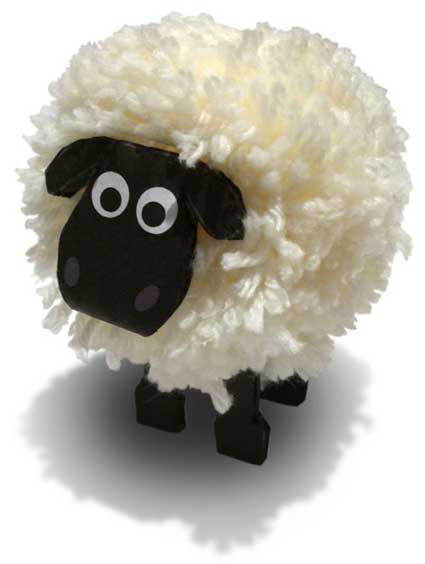
ROSH HASHANA: We and the sheep.
In our tradition the New Year -Rosh haShana- is also known as Yom haDin: the day of judgment. Our rabbis said that on on Rosh haShana: kol bae olam oberim lefanav kibne marom". All humans pass in front of the Almighty as the flock passes in front of the shepherd". Once a year, a shepherd - or a 'gaucho', as I recalled from my native Argentina- gathers all his sheep and carefully examines each one of them. If a sheep is heavy and healthy, he takes his brush and marks it with a blue color -which means that later on that sheep will be destined for reproduction- and sends the sheep back to the flock. If a sheep has very good wool, he gets a yellow mark, going to shearing. If a sheep is skinny and the wool is useless, the shepherd paints on its back a red color mark, which indicates that the sheep will be slaughtered and used for food. The destiny of every sheep is determined and 'sealed' by the shepherd on that crucial day. The rabbis explained that on Rosh haShana the Almighty carefully examines our deeds and actions and accordingly, He determines our fate, marking us for success, for life or chas veshalom for death.
Same as the sheep, we do not know what color we bear in our backs, but unlike the sheep, our destiny is not sealed on Rosh haShana. We have a window of opportunity of seven days to repent, ask forgiveness and appeal the original verdict -this is what we do in Yom Kippur- praying to the Almighty to accept our plea and revoke or commute our bad sentence.
Shana Toba uMetuka!!!
ERUB TABSHILIN for today!!!: Click here
Printable Seder of Rosh haShanahttp: Click here
Can a woman go to the Mikveh tonight? - Click here
Rosh haShana RAP - Click here
Rabbi Yosef Bitton. YMJC | 130 Steamboat Rd. | Great Neck | NY | 11024
Tuesday, September 7, 2010
What NOT to do when listening to the Shofar
Every day, we have many opportunities to ask God Almighty what WE want from Him. On weekdays, three times a day we recite the Amida. From its 19 berakhot, 13 of them focus on our needs and requests from God: good health, good livelihood, protection, etc. During Shabbat and Chaguim, when we open the Hekhal, we ask haShem to grant us good health, etc. In high Holidays, we request the Almighty several times for our Parnasa (livelihood) and long life, etc..
What about the Shofar? What should we think and reflect when we listen to the Shofar? Public opinion (and practice) notwithstanding, when listening to the Shofar we should not ask God for anything. Why? Because it is actually the only time of the whole year, God is asking something from us.
The voice of the Shofar should be understood as a 'divine call', as if at that time God is asking us what good have we done with the year of life He gave us.
The Shofar proclaims that haShem is our King, we owe Him obedience. We are asked to admit our mistakes and learn from them.
The Shofar reminds us the first 'divine call' to Adam, after he ate from the forbidden fruit. God addressed Adam 'asking' him aieka? Where are you? Not in geographical but rather in a moral sense.
When the Shofar is blown, it's actually the most inappropriate time to ask... It is a time to answer God's question: aieka?
ROSH HASHANA: What NOT to do when listening to the Shofar?
Halakha of the Day
~~~~~~~~~~~~~~~~~~~~~~~~~~~~~~~~~~~~~~~~~~~~~~~~~~~~~~~~~~~~~~~~~~~~~~~~~~~~~~~~
~~~~~~~~~~~~~~~~~~~~~~~~~~~~~~~~~~~~~~~~~~~~~~~~~~~~~~~~~~~~~~~~~~~~~~~~~~~~~~~~
Every day, we have many opportunities to ask God Almighty whatWEwant from Him. On
weekdays, three times a day we recite the Amida. From its
19 berakhot, 13 of them focus on our needs and requests from God: good
health, good livelihood, protection, etc. During Shabbat and Chaguim, when we
open the Hekhal, we ask haShem to grant us good
health, etc. In high Holidays, we request the Almighty several times for our
Parnasa (livelihood) and long life, etc..
What about the Shofar? What should we think and reflect when we
listen to the Shofar? Public opinion (and practice) notwithstanding, when listening
to the Shofar we should not ask God for anything. Why? Becauseit is actually the
only time of
the whole year, God is asking something from us.
The voice of the Shofar should be understood as a 'divine call',
as if at that time God is asking us what good have we done with the year of
life He gave us.
The Shofar proclaims that haShem is our King, we owe Him obedience.
We are asked to admit our mistakes and learn from them.
The Shofar reminds us the first 'divine call' to Adam, after
he ate from the forbidden fruit. God addressed Adam 'asking' him aieka?Where
are you? Not in geographical but rather in a moral sense.
When the Shofar is blown, it's actually the most inappropriate
time to ask... It is a time to answer God's question: aieka?
~~~~~~~~~~~~~~~~~~~~~~~~~~~~~~~~~~~~~~~~~~~~~~~~~~~~~~~~~~~~~~~~~~~~~~~~~~~~~~~~
William Kamkwamba's amazing Rosh Hashana lesson. From AISH.COM [http://r20.rs6.net/tn.jsp?llr=jp7o69dab&et=1103665433764&s=689&e=001wwyvyTYuKbM3mQMeE9TXiK1FvDqTiBP4OILlA-FYM6VZf8yLe4pWm_W77LebLIblARyTwmh-1krV9ygfyOKLFhovTaRwNxk_X4lMKK5pTnlynQOoeXgsjBPUJ5Qch-Z3xS42FMBhMEo=]
~~~~~~~~~~~~~~~~~~~~~~~~~~~~~~~~~~~~~~~~~~~~~~~~~~~~~~~~~~~~~~~~~~~~~~~~~~~~~~~~
Forward email
http://ui.constantcontact.com/sa/fwtf.jsp?llr=jp7o69dab&m=1103636165097&ea=halakhaoftheday.hotd@blogger.com&a=1103665433764
This email was sent to halakhaoftheday.hotd@blogger.com by halakhaoftheday@gmail.com.
Update Profile/Email Address
http://visitor.r20.constantcontact.com/d.jsp?llr=jp7o69dab&v=001qie9IeSPzo7ebT39DTi_kzXbFd66T4U-80SYGe19Lflx8EhjN_fQRA%3D%3D&p=oo
Instant removal with SafeUnsubscribe(TM)
http://visitor.r20.constantcontact.com/d.jsp?llr=jp7o69dab&v=001qie9IeSPzo7ebT39DTi_kzXbFd66T4U-80SYGe19Lflx8EhjN_fQRA%3D%3D&p=un
Privacy Policy:
http://ui.constantcontact.com/roving/CCPrivacyPolicy.jsp
Email Marketing by
Constant Contact(R)
www.constantcontact.com
Rabbi Yosef Bitton. YMJC | 130 Steamboat Rd. | Great Neck | NY | 11024