Wednesday, May 2, 2012

SEPHARDIC RABBIS: Rabbi Benzion Frizzi


Rabbi Benedetto Frizzi (1756-1844) or Benzion Rafael haKohen Frizzi was a Rabbi and a prominent scientists and physician in Italy. 

Due to his brilliant mind he was encouraged by his parents to  study Torah, Talmud and Hebrew Grammar at the school of rabbinic studies in Fiorenzuola. He completed his rabbinical training at Mantua, where he moved in 1769, at the rabbinical academy established by Rabbi Jacob Saraval. In Mantua he also completed his academic studies in Philosophy, Latin and Mathematics. Previously, he had studied engineering and he was qualified as an expert land surveyor at the age of 16. He also had a passion for the medical sciences. He enrolled at the faculty of Medicine at the University of Pavia and graduated in 1787.  In  1789, he accepted the invitation of the imperial government and moved to Trieste where he practiced medicine.  In 1816, in this city he founded a Jewish hospital where indigent patients were attended for free. 

He wrote several books in Italian showing to Jews and gentiles the code of public health of the Pentateuch (= Tora).  For example: "Dissertation on medical policies in the Pentateuch in regard to cleaning of streets and houses, and priestly laws of agriculture" (Cremona 1790).   The precepts given in the Torah,  rabbi Frizzi said are a "True Health Code" applied to the spiritual and moral elevation of man. 

One of his most important books was "petach 'enayim" (opening of the eyes) a scientific explanation of the Talmud (hagadot and halakhot), in seven volumes.  In this book, written in Hebrew, Rabbi Frizzi shows the vast and advance knowledge of our Rabbis. One thing I remember from his book is how he identifies the maziqin, which the Rabbis of the Talmud portrayed as "invisible damaging creatures", with the newly discovered "bacterias". 


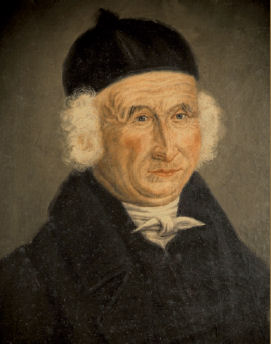
This is, allegedly,  the portrait of Rabbi Benzion Frizzi  


(Thanks to Rabbi Isaac Sakkal for sending me this information) 


PETACH 'ENAYIM


This unfortunately unknown book is accesible to all of us now, BH, thanks to  Hebrewbooks.org. 

Click here to read or download the book. 

His book was described as: 
"Philosophical, mathematical and physical analysis of those subjects contained in the Talmud collected in a special book called Israelitici populi Oculus".
Rabbi Frizzi's credentials were presented in the 1880 edition. 

"Benedetto Frizzi, Rabbi, Engineer, and doctor of Philosophy and Medicine, from Ostiano, Province of Cremona, partner in various academies." 
  

Tuesday, May 1, 2012

RELIGIOUS INTEGRITY: Truth and Peace


We already spoke about the value of saying the truth in Judaism. And how, the closer we bring ourselves to hold the truth, the closer we become to God Almighty, Whose seal (=signature) is EMET the truth; the ultimate reality (see here).

In the tractate of Yebamot (65b) the Rabbis explained that in certain circumstances PEACE (shalom) should be considered above the TRUTH.   Now, this is an extremely delicate issue and this principle cannot be applied indiscriminately.  The Rabbis then, gave a restrictive illustration from which we learn the dynamics between "truth" and "peace". Aharon haKohen, the brother of Moshe Rabbenu, was the champion of peace-making  in the Jewish people.  When two people would fight, he would go to each one of them separately and he would tell him, from his own mind, how much the other one regrets and feels bad about the fight.  When they would meet, they would embrace and kiss each other, and go back to their friendship. 

Aharon was so loved for his work in promoting peace that when he died, the Tora says that "KOL" Israel cried for him: every single individual felt indebted to him for his work in the promotion of peace. 

It is important to mention that this mediation technique should be applied ONLY if there is no harm for any of the parties. However, if by modifying the truth, one of the parties will be harmed or would have his rights violated, then it is forbidden not to say the truth.  If I know, beyond a  doubt, that Mr. A is going to harm (physically, financially, etc.) Mr B, I cannot lie or even remain silent "to promote the peace." it is a Mitzva to save a fellow man from any kind of harm (lo ta'amod al dam re'ekha. Vayiqra 19:16).

READ

by Kasim Hafeez, from Aish. 

Monday, April 30, 2012

CHUPA: Understanding the Chupa (Part 1)


The institution of marriage is a Biblical innovation.   Before the Tora was given to the Jewish people, explains Maimonides, a man would find a woman, bring her to his home and they would live together and bring children without any previous public commitment or formal ceremony.  Also, since there was no institution of marriage there was no formal process of divorce. If one of them wished to leave, he or she could do so at any moment.   

Once the Tora was given, the Mitzva of marriage was established: when a man and a woman wish to live together, first, they should get married . This is learned from the Pasuq in Debarim 22:13 "When a man marries a wife ..." . (The Tora also established that once married,  if the couple wanted to separate, they must do so by a process called: girushin or get keritut: formal separation or divorce).

Jewish marriage is a ceremony of a public nature and therefore it requires, at least, the presence of two witnesses.  

The wedding process consists of two steps: Kiddushin and Chupa. The first one, Kiddushin (also known as Irusin)  is a formal consecration or engagement (not to be confused with the engagements we have today!!!). At this step, and to establish the formality of the bond and commitment between the man and the woman, the groom consecrates the bride. This consecration is performed by a legal process of acquisition or qinyan. The standard custom today is doing this qinyan under the Chupa by giving a ring to the bride. When the groom gives the ring to the bride he consecrates her saying: "Behold, you are consecrated to me (to be my wife ) by this ring according to the law of Moshe and Israel".  Upon receiving the ring the couple are formally engaged or consecrated to each other.  However, the couple will be considered formally married only after the Chupa. 

(To be continued....)
READ